
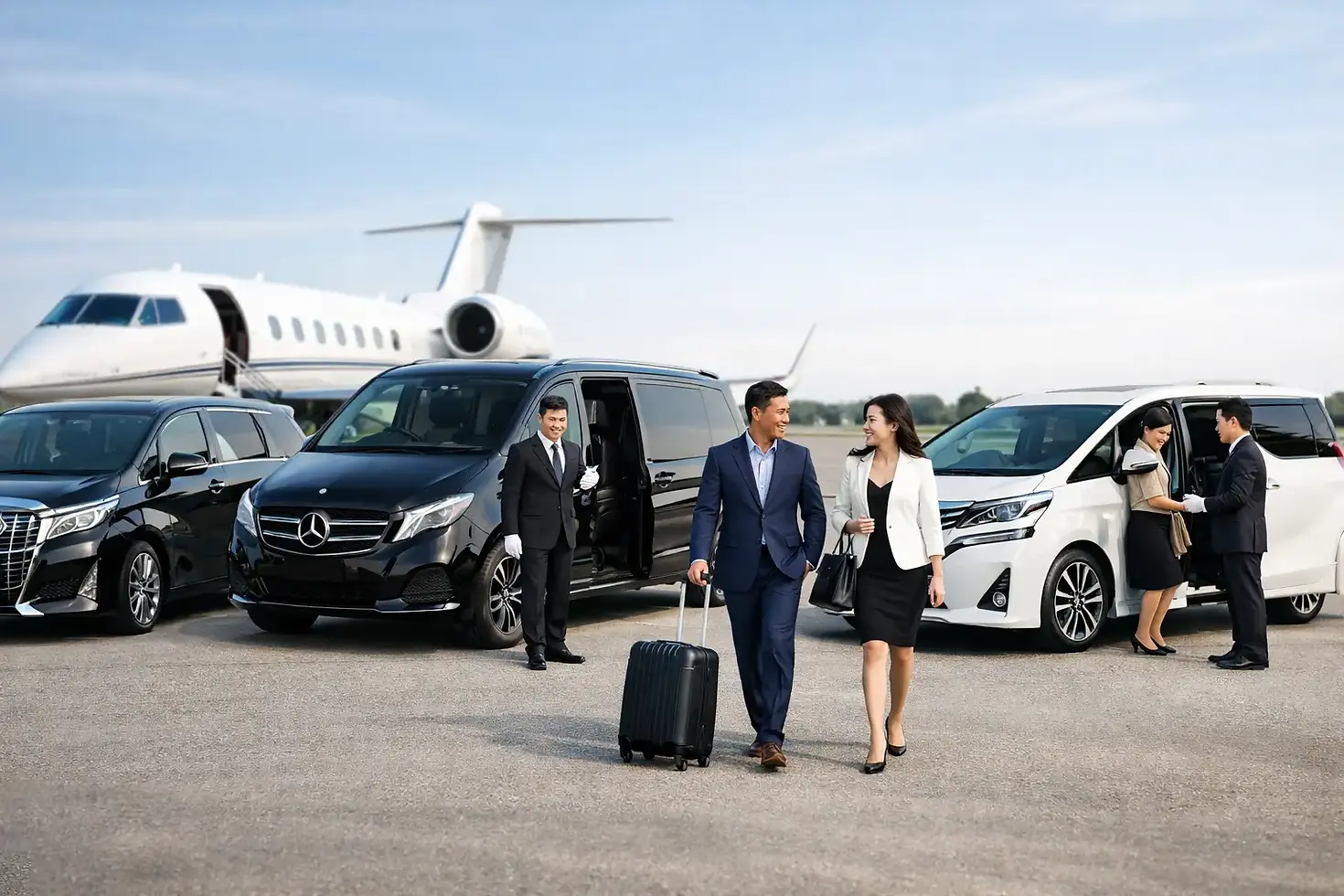
MICE Transport Planning for Executive Events

A conference agenda can be flawless on paper and still lose its rhythm in the hotel driveway. A delayed airport arrival, an undersized vehicle, or a guest left searching for a pickup point can affect the entire experience. MICE transport planning gives meetings, incentives, conferences, and exhibitions the disciplined ground movement they require - especially when executives, VIP guests, and international delegates are involved.
For event organizers and corporate travel coordinators, transportation is not merely a transfer between locations. It is the first personal impression of the program, a protected interval between commitments, and often the final measure of whether an event felt considered.
Why MICE Transport Planning Requires a Different Standard
MICE programs create movement at scale, but they rarely follow one simple pattern. A leadership meeting may involve staggered airport arrivals and private transfers to separate hotels. An incentive group may require coordinated departures for a city program. A major conference may need repeated hotel-to-venue shuttles, speaker transport, sponsor hosting, and late-night departures operating at the same time.
The central challenge is not simply capacity. It is coordinating people with different levels of urgency, privacy, and flexibility. A keynote speaker cannot be treated like a general delegate. A board member may require a discreet direct transfer, while a larger group benefits from a clearly timed shared departure. The correct transport plan respects both without making the operation unnecessarily complex.
In Singapore, this discipline matters particularly during peak travel periods, major exhibitions, and high-profile business events. Traffic conditions, access controls, hotel loading bays, and venue regulations must be considered before the first guest arrives.
Start With a Movement Brief, Not a Vehicle Request
A precise brief is the foundation of effective MICE transport planning. Requesting "cars for an event" leaves too much open to interpretation. A movement brief identifies who is traveling, where they need to be, what level of service is appropriate, and what happens if the schedule changes.
Before confirming vehicles, establish the essential operating facts:
Flight details, arrival windows, and terminal information for airport guests
Hotel, venue, restaurant, and off-site program locations
Guest categories, including VIPs, speakers, executives, delegates, and staff
Luggage volume, accessibility needs, and group size
Required pickup times, program milestones, and final departure windows
On-site contacts authorized to make changes during the event
This information should be consolidated into one controlled transport manifest rather than dispersed across email threads and messaging groups. The manifest does not need to be complicated, but it must have one current version. Names, mobile numbers, vehicle assignments, pickup points, and timing should be verified before dispatch.
Build Arrival Logic Around the Guest Experience
Airport transport is often the most visible component of the program. International arrivals may face immigration queues, baggage delays, or last-minute flight changes. A schedule based only on the published landing time is too narrow for high-touch guest handling.
Allow suitable buffers according to the traveler profile, flight origin, terminal, and onward itinerary. A guest traveling directly to a board dinner needs a different level of contingency than a delegate whose first program begins the next morning. Where practical, organize arrivals in waves and assign a dedicated coordinator for complex VIP movements.
Clear meeting instructions are equally important. Guests should know who will meet them, where to proceed, and how the chauffeur or coordinator can be contacted. For executive travel, discretion should be built into the process. Avoid public displays of sensitive names or overly conspicuous handling unless the client has specifically requested it.
Match the Vehicle to the Assignment
Fleet selection should reflect the purpose of each journey, not simply the number of passengers. An executive sedan is suitable for a solo principal or a private airport transfer. A luxury MPV offers additional space for small VIP parties and luggage. Luxury vans and larger people movers support delegate groups, production teams, and coordinated venue transfers.
There is a trade-off between maximum consolidation and guest comfort. Filling every available seat may look efficient, but it can create luggage constraints, delayed boarding, and a less composed arrival. Conversely, assigning private vehicles to every attendee may be unnecessary for a well-managed delegate group. The right balance depends on the event's protocol, budget, journey length, and the expectations attached to each guest category.
Design the Plan for Live Operations
A transportation schedule should not assume that every session ends precisely on time. Speakers run over, security checks take longer than expected, weather interrupts outdoor programs, and guests occasionally change plans. A reliable operation is designed to absorb reasonable variation without forcing the event team into constant recovery mode.
For larger programs, create defined transport waves. Instead of asking every attendee to depart at once, schedule groups around session end times, meal periods, or hotel blocks. This reduces congestion at loading areas and keeps venue exits orderly. For VIPs and senior executives, maintain separate movement instructions so their timing is not tied to the general delegate flow.
On-site coordination should be calm and visible without becoming intrusive. Chauffeurs need accurate access instructions, holding locations, and contact details. Event staff need to know which vehicles are on standby, which have departed, and who is responsible for approving additions or reroutes. A single decision-maker prevents contradictory instructions during busy periods.
Contingency planning is part of service, not an admission that something will go wrong. Reserve capacity may be appropriate for a high-profile gala, a large airport departure bank, or an itinerary with several venues. For smaller events, a standby protocol may be more sensible than holding unused vehicles throughout the day. The level of backup should match the consequence of disruption.
Common Gaps That Put the Program at Risk
The most frequent problems are usually preventable. Incomplete flight information leads to uncertain airport pickups. Generic pickup locations create confusion at large hotels and convention centers. Last-minute guest additions are difficult when no reserve capacity has been considered. And when several people can alter the schedule, chauffeurs may receive conflicting directions.
Another common error is treating the final departure as an afterthought. Guests leaving a gala, conference, or evening reception may depart in uneven waves. Some will need airport transfers; others will return to multiple hotels. Confirming departure requirements early protects the close of the event and avoids an otherwise polished program ending in disorder.
Event teams should also account for luggage. A vehicle that accommodates three passengers comfortably on a short city transfer may not suit the same passengers with large international baggage. This detail is especially relevant for airport departures and incentive programs involving shopping or equipment.
Selecting a Chauffeur Partner for MICE Programs
A suitable transport provider should bring more than vehicles. Look for an operator that can interpret a movement brief, recommend sensible fleet assignments, and communicate with precision. Transparent transfer pricing and clear terms reduce uncertainty during budgeting, while professional chauffeurs protect the guest experience in the moments that matter most.
For executive and VIP programs, discretion is essential. Chauffeurs should understand formal arrival standards, privacy expectations, route awareness, and the value of quiet, composed service. The vehicle should feel prepared before the guest enters, not merely available.
Nobleway Limousine supports corporate and event mobility with a structured fleet ranging from executive sedans to larger people movers. For planners, the value is in disciplined coordination: the appropriate vehicle, clear timing, and a calm standard of handling for every assignment.
The most effective event transport is rarely the most noticeable. It is the one that lets guests arrive collected, sessions begin with confidence, and organizers remain focused on the event rather than the driveway.


Comments